Recently, meditating, I had one of the those strong experiences when words simply appear in my mind. They come to me as if from some remote, subconscious part that requires my full attention. And I listen. The words happened to be, “straw for the fire.” This was perhaps three weeks ago and I am still listening, wondering at the meaning.
As it turns out I own a book called, Straw for the Fire, a beautiful collection of snippets from the notebooks of poet, Theodore Roethke. I hadn’t even opened the book since I bought it a year ago or so, and I had trouble finding it in my apartment after that ‘straw for the fire” line first appeared in my head. The book’s cover shows a barn on fire and begins with these lines:
What dies before me is myself alone:
What lives again? Only a man of straw –
Yet straw can feed a fire to melt down stone.
Mystery.
Roethke is an important figure for me. I connect his poems with my transition from childhood to adolescence. I dove headlong into his poetry after buying a copy of The Wild Cascades: Forgotten Parkland, published in 1965 by the Sierra Club in support of the creation of the North Cascades National Park in Washington State. The book, long out of print although still available is filled with dramatic black and white images of the then unprotected mountains and forests and displys beside them passages from some of Roethke’s most famous poems, approved by his widow. Roethke had died in 1963, about the time I started backpacking on week-ends into those same mountains and writing my own verses. Any number of Roethke’s poems still haunt me. From time to time, like a smell from childhood, woods in spring or hay drying in the barn, I am transported to the essence of those early days. In the book, next to images of high rocks, glaciers, and smooth, cold lakes are these words, for example, that are both familiar to me and now also part of childhood’s dream:
There was a hardness of stone,
And uncertain glory,
Glitter of basalt and mica,
And the sheen of ravens.
Between cliffs of light
We strayed like children,
Not feeling the course shale
that cut like razors,
For a blond hill beckoned
Like an enormous beacon,
Shifting in sea change,
Not even farther.
Yet for this we travelled
With hope, and not alone,
in the country of ourselves.
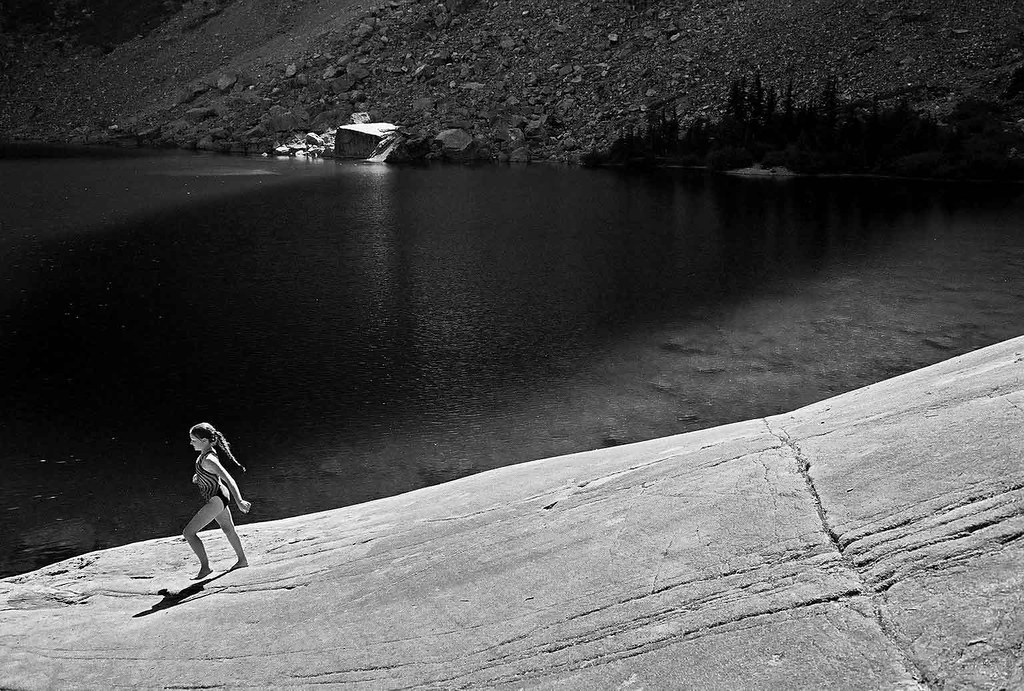
I read these words today and they feel like the inner autobiography of my work over the last forty years. I am still one of those children, and still straying.
Anyway, the words, “straw for the fire” have come back to me many times over the last couple of weeks and seem to have their own momentum. I find myself among friends, all of us trying to create a space for our inner work, all of us trying in one way or another to find the right way to be among circumstances that come to us laden with challenge, with meaning and karma, wave upon wave. Just today, buying a cup of tea, I noticed a receptacle for tips next to the cash register, “karma jar” written on it in large letters, filled with money, and I thought, “I better give more.”
And so I’ve wondered about all my karma, all the suffering, the petty hurts and competitions I have participated in, the mistakes and problems I’ve created for myself and others, the experiences of guilt and regret, the insecurities and depressions, the fear, and thought to myself, “more straw for the fire.” How much of this stuff in which I’ve invested so much meaning is important in the way I thought it was? It isn’t to say any of these things could have been avoided or neutralized. The fire burns, as it must.
I’ve wondered according to Roethke’s poetic aphorism what stone I am attempting to melt, what part of my heart yet must open.
All this reminds me, too, of that strange book “translated” by Gitta Mallasz, Talking with Angels, easily the most compelling statement of influence by spiritual entities I have ever come across, in which the purpose of human life is again and again explained as, to burn.
Not easy. I have proceeded with this meditation I have asked myself repeatedly to what purpose is this burning? The reply that comes is a deep affirmation. I do not want to add here misleading words, as if that affirmation could be spelled out in a way that would be necessary and self-evident. I am spiritual, not religious, and believe each of us is meant to find the depth and meaning of our own experience. I “think by feeling,” as Roethke would say, and identify with that line from his mystical masterpiece, The Waking, that says “the lowly worm climbs up the winding stair.”
Whatever progress I make in the climb is dependent on that “burning,” that seems clear. In yet another poem, The Abyss, Roethke shows how completely he has already been there, mastered the territory, watching all the straw burn.
Perhaps igniting it himself.
So the abyss–
The slippery cold heights,
After the blinding misery,
The climbing, the endless turning,
Strike like a fire,
A terrible violence of creation,
A flash into the burning heart of the abominable,
Yet if we wait, unafraid, beyond the fearful instant,
The burning lake turns into a forest pool,
The fire subsides into rings of water,
A sunlit silence.

Hi Dan,
I admit I was puzzled by Roethke’s words at first – surely we are more than straw?
But like you, the words set me thinking, although the pattern of my own thoughts has branched off down a different path to yours; for what it’s worth, I share them briefly here. I’ll see too what else emerges as they sink in.
As I get older, I find, as I think do many as the years go by, that what we see as our ‘big achievements’ are really just so much straw. Not only the material achievements, but also those structures of reason that we fabricate around our activities, our hopes, our goals. We think the endgame, the result of all those steps along the way, the endpoint of the climb, is what matters, but in reality it’s the tiny steps themselves – the coins in the karma jar – which mark the path we have trodden and are the only tangible effect of our having been here. All the higher abstractions are just that – abstractions.
So in that sense, perhaps there is no straying from the pathway, because there is no pathway, only a succession of steps which we see as being joined up only in hindsight.
What’s gone is gone; what’s done is done. Its value, such as it might be, only ever lived at the time; now, it is just so much straw – the harvest has gone and all that remains is stubble to be burned to prepare the ground for the next sowing.
Thanks Dan – it does me good to be prompted to think in this way!
Andy — thank you. You’ve enriched my commentary immeasurably. I like the idea that it isn’t just the things we suffer but also the things we think of achievements and great moments that are straw. The scythe cuts a broad swath (I watched my father do it) and, just so, we’re left with the “stubble” and even that burns down! Thank you for your beautiful insights.
Two other posts I’ve come across lately, one at Riding on Dragons and one at Graceful Presence enrich this dialogue in their own way. Ah, synchronicity.
Best to you.
Such a beautiful, personal and touching conveyance. Thank you. I have been touched by your thoughts in a very beautiful and personal way. I am just beginning to watch the straw ignite of what heretofore has always been ifentified as my life. I was wrong, it was simply compost.
Alan, thank you for your kind comment on what is now an old post. Indeed, sometimes, just when we think we’ve got something important going on, the straw lights up. All the best to you.