My mother and father were seventeen years old in 1929, so I grew up hearing about the Great Depression. I recall the stories, mostly from my mother, about how millionaires jumped from windows on Wall Street as they realized their fortunes were worthless. My father’s stories were also extreme. He had been a refugee in Europe for three years before coming to the US, wandering from country to country depending on the good will of others to find a place to sleep, a job for the day, or a meal. My mother lamented that people often helped each other more in those days. There was more of a spirit of something — neighborliness, community, looking out for one another, she said. Perhaps all that was simply fabric of a story that could have been true, a social mythology created after the fact. Nevertheless what I inherited through these stories was the sense that people could be genuinely for one another, especially in tough times. They could wish for one another’s success, collaborate rather than compete, share their resources no matter how meager. This is what I was conditioned to believe.
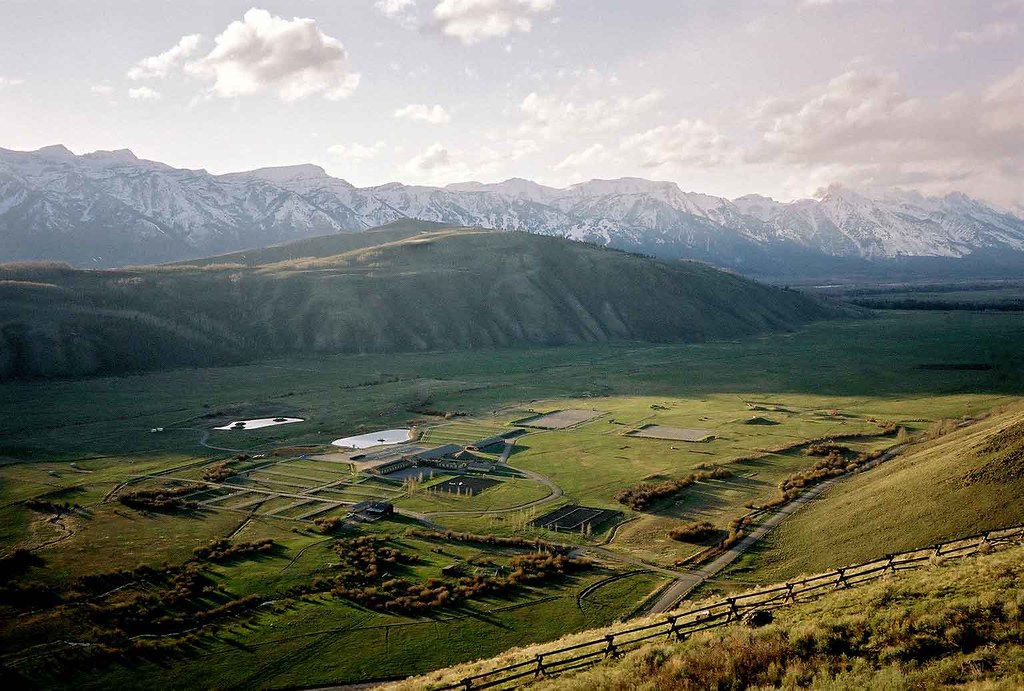
And so in fact I do hold a faith that people have great potential to share and to give to one another — in all ways, not just the economic ones. One place I witnessed this capacity most dramatically was at the workshop that two friends and I used to host in Jackson Hole called “Beyond the Edge.” The workshop offered a beautiful natural place and sufficient time — four days — for people to do intense individual leadership development work. My co-facilitators and I commonly observed participants developing very strong connections with one another. Mostly attendees began as total strangers. Yet within a few hours of starting the workshop the seeds of connections were born, some of which were destined to last for years. As we told our life stories and described why we had chosen to show up at this event, common patterns and understandings quickly emerged and so did differences of experience, feelings of isolation, and individual’s personal and unique challenges.
These natural connections more than convinced me that people can rather easily form relationships in which they are genuinely for one another. They can be present at a deep level, supporting each another’s most heartfelt aspirations, successes and processes of growth; along the way encouraging and creating a place for real openness to prevail. Now, the event itself had nothing to do with intentional work to create trust and community; there was no coercion to be more open than anyone wanted or needed to be. We did encourage people to be generally supportive of one another, but we also reminded them that this was not a team building event but one devoted to individual development and held for people who happened to be in the same place at the same time. The prevailing norm for mutual support that emerged mirrors what I now believe is a natural state for people in groups. Frankly, watching this happen was one of the greatest joys of being a host and facilitator for the workshop.
That such mutual support is a “natural state” does not mean, however, that it naturally occurs in organizations. It appears organizations, where people are highly interdependent in their work, are simply not safe enough for this to occur. I have heard people explain it all away with phrases like: “I’m not going to be that open there. It takes me a long time to trust people I don’t know.” Yet the people at Beyond the Edge doing deep inner work with a great deal of personal disclosure developed trust and rapport very quickly, within a few hours. I’ve heard people talk about openness at work as if it necessarily means criticism of others. “If I were really open, I’ll tell so-and-so to get off his butt and do his job.” Yet at the workshop, there was no need to criticize others because people were focused on their own “stuff,” their own struggles and challenges and that was all evident. Where the openness really counted was in participants’ own openness with themselves, in their honesty with self.
As a result of these contradictory experiences, I have come to feel that there are some real mysteries in this process of forming a team, especially how strangers, focused on their own stuff become respectful, supportive, caring and truly helpful faster than intact teams where people must work together all the time. The difference, it seems to me, is in the innate turn toward being truly for another person that was released at Beyond the Edge. There’s an old saying that conflict happens wherever there is a required interdependency. At Beyond the Edge people were not dependent on one another’s success so they were free to voluntarily help each other much more and much faster than most intact work groups. They did this naturally. They were also not rated externally according to anyone’s standards. There were no “performance reviews” only dialogue, discovery, and suggestions. What mattered was each person’s own experience of themselves.
Is there a way to take the kind of environment of Beyond the Edge and begin to translate it into team experiences in the workplace? What in fact, could that mutual help look like? What could I or anyone do to be genuinely for someone else:
1. I can listen to the other person to try to see things from inside their world, rather than from inside my own.
   2. I can accept and empathize with the other person’s emotional realities — fear, excitement, anger, clarity, sadness, joy, confidence, doubt, or devotion — whatever is felt.
3. I can affirm the person’s positive intentions and desires, and evident strengths and gifts.
4. I can offer my best ideas on how to address the dilemmas faced by the other person.
5. I can ask really good questions to help another person figure things out on their own and call their best self forward.
6. I can help another person articulate their challenges in a way that helps make them understandable and sustainable.
7. I can confront in a healthy way the negative thinking, assumptions and behaviors that are getting in the person’s way.
8. I can help the person reframe their challenges in a way that releases options and possibilities.
9. I can go out of my way to be of help — physically, emotionally, intellectually, spiritually. I can use my own gifts to help.
10. I can connect other people in ways that help them both.
These are examples. You may want to add to the list.
For this level of support to work, of course, there has to be a certain mutuality. I must know something of the other person’s real challenges and that can only happen if there has been disclosure of what those problems are. A seed of openness must be present. I might try hard to bridge the gap, but a bridge has two ends, and both have to touch the “ground,” from sender to receiver and back again. I know that some of you reading this will say, “Yes, I tried that and I got burned,” or “It didn’t do any good — my support was never reciprocated.” This is indeed where the mystery comes in. You can’t just break down the walls in a one-sided way. But you can be there, stand for a deeper mutuality, invite openness, sometimes invite it very gradually, learn how to be open yourself in front of others. I believe some of your energy inevitably will come through and will influence things, if only in a subtle way. When the time is right, the good stuff begins to happen.
Indeed there can be a sadness in this work. I have engaged with many teams and offered many opportunities but sometimes even one person who doesn’t understand the power of being for one another can upset and undermine the possibilities. I’ve worked in environments, even environments that purport to teach such powerful ideas as “systems change” and “feedback” and “leadership,” where the players seemed deeply unwilling to operate in a genuinely supportive way with one another. What was communicated with brains and mouths was one thing; what was taught with bodies and hearts was quite another. And yet, just as one person can prevent openness and mutual support; so one person can also be the spark of creation. The nature of positive leadership is to be that spark and to fan the flames once something begins to catch fire.

Recently, for example, I worked with a team responsible for a massive project on setting and implementing ground rules. We were doing okay, but things got much better when one of the group leaders asked people to talk about their vision of what kind of team they wanted to have. Sure enough, people shared their experiences of the best teams they had been part of, and they spontaneously began to ask for things that really count: forgiveness if they made mistakes, patience and forbearance with the need to vent from time to time, listening to one another without necessarily advising, getting out of the silos, and a chance to ask questions that might reveal how much they didn’t know, instead of making statements that showed off how much they did.
In the end, what we who are interdependent need to do, I believe, is take a small leap of faith, assuming that at bottom we all want to deal with our own stuff and knowing that none of us ever does so without receiving help from others. This means that as an individual I have to be as open to receiving help as much as giving it, be as vulnerable to others’ feedback as I am willing to offer it with sincerity, be as searching of my own motives as I am good at assessing the motives of others. As a leader I cannot force my leadership on anyone, but I can lay the table and I can invite guests. In a humble way, I can make my house available for anyone.

Dan, what a great post. The story you provided about your mother and father and their feelings toward neighborliness, and being “for” others, is very similar to my own family’s story of neighborliness and being for others. My parents were born and raised in Eastern Europe. They were from a place where doors were never locked, windows never closed, and your neighbors kids were seen as your own. What happened? What has changed? Why have we moved, as humanity, from societies focused on building one another to societies that, frankly, could care less?
It has to do with getting back to basics in my opinion. It has to do with moving from a society driven by individualism to a society driven by collaboration. Why have we been able to build a strong society since, say, the early 1900s? In my opinion, it has to do with collaboration. We NEEDED each other to succeed and, frankly, to survive. So, we worked together. Slowly, over time, we became so strong that we no longer needed to collaborate. We no longer needed to support each other. We no longer needed to work together to survive. That shift has caused us to become extremely weak. We no longer have group goals and objectives, as a society, but individualistic goals. That’s why we are weak. The greatest thing about this economic downturn is that we have the opportunity to realign ourselves as a culture. To get back to basics. But, will we? Your suggestions just may help us realign ourselves and rethink the way we behave and the way we live.
This is an excellent article. The 10-“ways” are suggestions I need to reflect upon today, and tomorrow, and next week… Thank you Dan.
GeorgeB — You are most welcome. Thank you for stopping by.
Aleks — I very much appreciate your perspective. As usual, you have added another dimension to my thinking. I like this notion that we wanted to be strong so we would not need others, but this turns out to be a source of weakness in the end. Individualism, like all dogmas, is flawed because it reduces the complexity of what is real. And when reality is reduced, so are we. I think it will be quite interesting to watch how social attitudes will change as a result of the economic downturn. As I said in the post, I believe we can collaborate, and perhaps adversity will reawaken our desire to do so more effectively. Thank you, Aleks.