For more context on this post, please see:
The Practice of Leadership
Eight Leadership Practices
First Practice: Knowing Your Leadership Edge
Second Practice: Developing Your Comfort Level with Feedback
Fourth Practice: Leadership and Influence
Fifth Practice: Discussing Undiscussables
Sixth Practice: On Collaborating
Seventh Practice: Personal Integrity
Eighth Practice: Spiritual Perspective
 The practice of self-care begins with an understanding that unless I care for myself, I may not have the resources to truly care for others.
I want to start this posting with a poem by the Spanish poet, Antonio Machado, as translated by Robert Bly:
The wind, one brilliant day, called
to my soul with the odor of jasmine.In return for the odor of my jasmine,
I’d like all the odor of your roses.I have no roses; all the flowers
in my garden are dead.Well then, I’ll take the withered petals
and the yellow leaves and the waters of the fountain.The wind left. And I wept. And I said
What have you done with the garden that was entrusted to you.
Indeed, what has happened to that garden we have been entrusted with? Had someone asked me this question twenty years ago, I might have discounted them by hastily replying: “I’m JUST FINE, thank you!” and I would have been thinking in the back of my mind about the next project and deadline, the next accomplishment, the next thing on the list that I needed to get done. After all, I was scrambling to build a future.
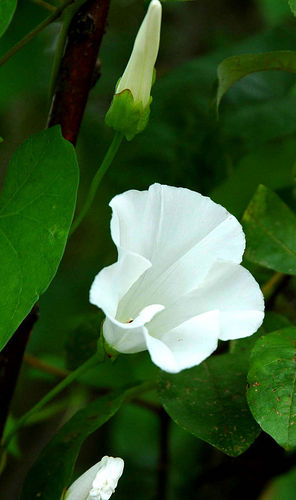
Ah, so many of the leaders I have worked with have known how at a certain level to keep body and soul together, but did not have within them the single best marker of self-care, which I take to be joy — in life and work, relationships, and self. When I look deeply into the bowl of plumeria blossoms at the top of this page (a photo taken in Maui a couple years ago) I am always reminded of that joy. And I ask myself, am I living this joy today or have I covered it up in my search for accomplishment, in my devotion to my causes?
These are my words to me about me, but I frequently see the effects of lack of self-care when I work with others. A common manifestation may come from the noble aspiration to be responsible. I once worked with the head of a hospital who was so responsible he had to personally approve almost everything that was happening, right down to selecting furniture — a new lamp in one of the patient rooms, for example. When I became better acquainted with this smart and sensitive man, and learned more about some of the chaos in his family as he had grown up, it became easy to see that he had replaced his capacity to care for himself with his capacity to “responsibly” care for his organization — to do what felt to him to be his job. No one could help him if they did not also feed that private monster. If a mistake was made, it was his mistake and he had to do everything in his power to prevent mistakes, up to and including taking decisions away from his eminently qualified staff.
I worked with another manager in a hi-tech firm with a similar problem, although expressed much more dramatically. He would publicly berate those who made mistakes in consistently personal ways — making comments about others’ bodies and intelligence levels. Luckily he knew he had a problem, and was ultimately able to see quite clearly that he was absorbing others into himself. He began to understand that their mistakes were not his mistakes. Just recognizing this was an important first step to changing his relationships.
All of this is about interior voices that can slam us up against the walls of the interior space that might once have been a garden. It is how we treat ourselves that is “leaking” into our relationships. It seems obvious to me that people who become brutal or dismissive or ambivalent to others are often dealing with powerful interior forces that drive the exterior behavior. A person who cannot be generous with him- or herself is likely to have a very difficult time being truly generous with anybody else.
This brings us to the subject of healing, and the practice of self-care. To many, these words are not easily heard because they privately feel a need to become tougher and more durable and smarter around the hard edges of reality, even if this means cutting themselves into two people.
Pema Chodron, the American Buddhist nun, has written that we can let life harden us — or, if we can stay open, we can let is soften us, resulting in a new way of being. If I choose the route of hardening, I may also find that I need many compensations, more toys, more money, more power, a bigger house, more houses, a job with more status, bigger and better addictions, new accomplishments that demand I work harder and harder, become ever more “responsible” and smarter than others in order to assuage my own personal but unacknowledged need for joy. And there it is, I’ve said everything I know about self-care: it is a need, not a preference, not an add-on. It is a necessity for life. And if the need for joy is not accessed, it will come back in a different form, as a symptom.
An administrator I know did some refined work to begin finding his own joy. He knew he needed to do something because he possessed an inexplicable sense of malaise about his life and work, and he would find himself mysteriously becoming upset with his wife and children. Given a chance for some solitude and for a little reflection, memories of his father spontaneously appeared; memories of the random beatings he received as a child with the buckle end of the belt. Now in mid-life he was strong enough to deal with these memories, and he began his self-work by taking one of his own belts, cutting it up and, with a friend as witness, burying it on mountain-top. The malaise had a source.
There are parts of ourselves that we can hardly hold, and those parts obscure the bowl of plumerias, spoil the garden of a soul.
You may have expected me to say that the practice of self-care is about eating well, giving ourselves time for renewal, exercising regularly, finding our art, meditation, balancing out life and love and work. The capacity to do those things is surely very important evidence, but I believe they are actually expressions of something deeper. And if we are struggling with such activities, or they don’t bring us lasting joy, if they are just a discipline, it is entirely possible there is a lingering need for self-forgiveness for what has happened to us, and what in our interior life — in what we say to ourselves — is still happening to us today.
 When a leader has this kind of inner practice of forgiveness, so that their joy is never lost, he or she can naturally become immensely and positively influential. Let me explain through a story. A friend and former client who is CEO of a small enterprise (about a hundred people) once got some uncomfortable feedback from a member of his organization. He was informed by an employee that he had made an off-hand comment in a meeting that could have been construed as racist. Now this is the sort of mistake many people in exposed positions like to deny or dismiss as quickly as possible. But my friend is a very fine leader. He did not argue the point nor did he discount it. He sought more information and understanding, and, of course he offered a private apology. But he went further. He used this incident as an avenue to open up an important conversation about racism in his organization. With the permission of the person who brought him the feedback, he shared at an all employee meeting what had occurred, thanking and recognizing the “messenger” for coming to him. He also asked everyone to share with him any other instances where he said something that could also might be regarded as racist. He was using what had happened to him as a positive opportunity for both personal and organizational growth. You may say, this must have created tension for everyone. Of course! But he also, in his openness and honoring of the messenger, began to build the path past it.
This is an entirely different way of responding to a mistake. I believe only someone who knows and experiences a very genuine joy in self, who lets life soften rather than harden, also can do work as a leader of such exceptional beauty and grace. You could say, well, the CEO was modeling his leadership through interpersonal courage, but this diverts us from knowing what stands behind the modeling and the courage. And that would be the practice of self-forgiveness, the renewal of the garden in which a person — you or me — is truly free to grow. When the garden is growing, and we are tending it, we become curious instead of defensive, acknowledging rather than denying, able to embrace a community and be embraced by it. When the voices of interior criticism retreat, there — beyond all the cover-ups and false pretenses of perfection that hide our vulnerability — there, the joy abounds.

Rosanna
What I find so interesting is the “more so leaders” line about mistakes. Yes, I do believe, the psychological exposure does do things to people, which means there is pressure to be even more integrated. It’s either growth or denial! Thank you for the image of the mirror and the make-up. If only we could learn that by hiding the “lines,” we also hide our wisdom. And, truly, it is about the eyes, seeing and being seen, as much by others as ourselves.
Good luck on your new blog! Congratulations! Come help Rosanna get started at her site: Scrapbook of My Life.
You are right, Chris, and I believed he plunged headfirst into that bowl of plumeria…from a long ways up! Thank you for stopping by today.
Joy is renewing, as you say. Long a very private person, these days I am struggling with how to translate what I know about how to foster joy in my own life into a multi-person context, say my office or my working relationships with colleagues. It is clear to me that cherishing each person’s contribution–no, their most fundamental being–is critical. It is clear to me that communication skills are required. It is extremely clear to me that my failures to connect ripple through a group and that I have to set an example in patience, in not trying to correct problems before understanding them, and in avoiding being overly responsible. Joy is an old friend in my personal life; perhaps I can find a group version. I’ll think about that.
Dan,
I have a comparison for you.
A woman wanting to conceal circles under her eyes needs two things (mainly):
a) a mirror to look into
b) the willingness to look at it
In order to care for yourself you (generic person) need a mirror, something reflective of your mistakes, and the willingness to correct them, willingness that I believe most people don’t have. Paradoxically, more so leaders.
When you are in charge of something, be it a group of person, a business or both, making mistakes generate insecurity. At which point you have two chances: pretend it just didn’t happen, or face it asap.
But as I said, deciding to face it, means deciding to correct yourself, which in an individualistic ego-driven society maybe be a very hard thing to do. That’s also why it is more comfortable to follow others making big mistakes than amending existing “best practices”.
So more often you (generic person) end up sweeping mistakes under the rug, till the dust is so much that you can’t possibly hide it anymore and it blows all in your face, life and success, spoiling all you got, or so.
Too often we are taught that in order to be a good professional, and a good leader, we have to be perfect. False. All we need is to be able to learn from mistakes, and that’s all the perfection we need. If we were taught that, it would be easier. Not easy, yet easiER.
If we understand that perfection is imposible for humans, that making mistakes is NOT “being a looser”, that being a looser is HIDING from learning, THEN we wouldn’t blame ourselves for our mistakes, but just correct them.
And if we could just correct them, without passing judgements, we WOULD be able to care for our imperfect selves.
But try to tell this that I said to ego-driven people and they will say: “YOU make mistakes, I don’t”. No wonder they suffer so much 🙁
Rosanna
I’m trying to put into the words the feeling of this CEO when he realized he made a mistake and chose to GO INTO in rather than run away. All that comes to mind as I reflect on similar experiences is that the feeling involves catching one’s breath. THere is a constricted feeling before you go right into that place of openness and vulnerability. It’s like looking over a precipice and choosing to plunge anyway.
Terrifying. Dealing with this kind of terror is a leadership practice. It’s real courage.
I found your post quite by chance, having also written about joy just yesterday. To paraphrase rather bluntly: all I need to experience joy in my life is to give myself permission to let the joy flow from its source within out into the world. That can be a frightening thing to do, especially for one steeped in corporate culture, because to do so is to step outside the circle of what is normal behaviour in organisations. But, for me, lesson one has I think finally sunk in — understanding that the joy IS there, waiting…