Yesterday, as I do a few times a year, I walked a labyrinth located near where I live. I have posted before about using this ancient tool for reflection. It was a cool day, gray overhead, but I found it as easy as ever to engage the path to the center, meditate for awhile there, and then return — out the way I came in. I was not holding any particular question in my mind, but rather simply observing the nature of reflection itself. Come with me on that walk.
I have noticed lately a major jump in hits to this site from keyword searches for “reflective leadership” or similar terms. I posted a definition not too long ago. In this post, I want to come at this definition from some other angles. In a sense, this definition is never done. Reflective leadership is always extending and revising itself because the very process of reflective leadership demands that. For instance, it seems clear that some people use the term to mean simply “leaders thinking about things” rather than doing all the time.
At this level, questions such as “What key decisions are coming up?” or “How do we spark more innovation on the ABC project?” are examples of reflective leadership.
At another end of the spectrum, however, the questions are much deeper, perhaps including such personal inquiries as “What are my insecurities and how shall I address them? How are they reflected in this organization? What are my real motivations? What are my shadows and blindspots?”
And from yet another angle, the questions that drive reflection may be as deep but more externally focused, such as “What is the change in the world I want to make? How can I best use my gifts to build community? What will genuinely bring us together around [a particular] issue?”
All of these directions get lumped into the bucket of reflective leadership. What unifies them, even at the level of the thinking versus doing, is the notion of stopping and making a subjective inner turn to look in the mirror of what is happening. In this sense, reflective leadership depends on a person moving to a “meta” level — reflecting on their work and themselves. All forms are legitimate, and I would say typically people will move as they grow from the thinking/doing dilemma to the larger issues of meaning. Left-brain consideration gives way to right-brain intuitive, even symbolic thought.
Four Types of Reflective Experience
Some years ago, the insight came to me that the real change agents in the world were not people, certainly not me. The real change agents were the reflective experiences that go on inside people, and the best I could do would be to provide opportunities for those reflections to occur. Have I followed this notion in all my work? I wish I had, but the truth is I still spend way too much time advising and not enough helping others focus on the wisdom they can find within themselves.

So what are these reflective experiences? Are there key ones? I would say there are four that are particularly powerful — and all found at the deeper end of the pool. Some are obviously more important than others depending on the person, but each makes a contribution to the wholeness of the individual. They are all about “what comes up” in the presence of certain aspects of life and the world that touch our subjectivity. They bear on twin aspects of who we are: our sensitivity to reality and our inner strength. They are fundamental sources of inner work and directly affect how we lead. They are about who we are in the presence of:
• Silence
• Beauty
• Timelessness
• Community
1. Silence. What comes to mind in the presence of real silence is a powerful indicator of who we are. Silence, when it shows up, can be an enormous gift. Whatever is in the background of our thinking, feeling, and intuition comes forward. Anytime there is silence, the mirror is present but sometimes more dramatically than others. I remember a participant at a “silent breakfast.” A silent breakfast means people come, eat, and reflect individually while they eat together, but they don’t engage in conversation. After the breakfast in question, when others had left, the participant broke into tears. He turned to one of the facilitators of the breakfast. “What I realized this morning is that I have been having a silent breakfast with my family for twenty years!” All that stuff about his family was waiting in there for silence to catch up with him — the beginning of a journey for this man.
I remember a very different experience of silence at the Grand Canyon. You could call it silence but it wasn’t a dead silence at all, but one simply devoid of human noise. The silence was not different than the sound of the wind and flit of insects, the occasional chirp of nearby birds. A colleague turned to me. “It feels like whatever energy you put out there,” she said with a nod to the vast emptiness of the Canyon, “will come back to you ten times over.”
Silence occurs in other places, too, including poetry. There’s a great line at the end of the poem, “The Invitation” by Oriah Mountain Dreamer.
“I want to know if you can be alone with yourself and if you truly like the company you keep in the empty moments.”
This line alone might be a definition of reflective leadership. The challenge of silence is that it fills with whatever needs to be emptied out of a person. Silence brings it all forward. For some people this brings a sense of peace and joy. For others, there is fear, regret, or anger. Silence is a primary means by which we “download our own stuff” (to use a phrase a friend of mine invented.) Those who cannot sustain the download often try to run or hide from themselves. Effective leadership demands precisely that we do not avoid who we are and what is in us.
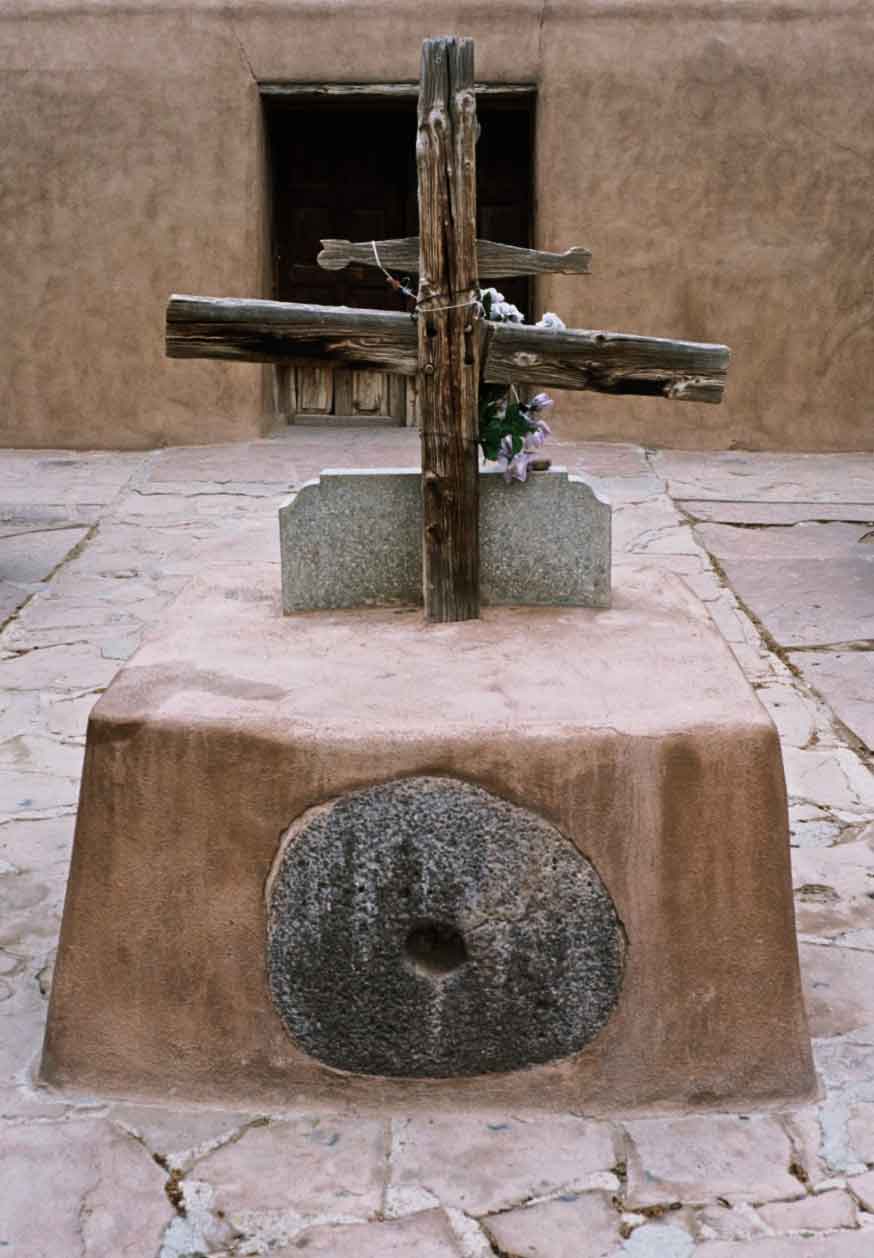 2. Beauty. What happens when we are in the presence of beauty? Whether it is an elegant painting or a mountain vista or looking into the face of a child, beauty has a way of powerfully communicating our connection to life. Do we see our actions as the brushstrokes of our lives? Do we see our own beauty as individuals?
I remember working with a client who seemed to be operating a little superficially in terms of her vision. It was too rose-colored, and at the same time she seemed to communicate a underlying despair. One day, after a walk down a long hill a memory came to her of her ex-husband and how he had told her he thought she was physically ugly. This was the bottom point of her walk and of a memory that was getting in her way. She turned and walked back up the hill. She left the damage her ex-husband had done at the bottom and grounded her vision in her full and real experience rather than a fantasy. She created a different stand vis a vis her own beauty and the beauty of the world she wanted to create.
Something about beauty causes us to see whether we are truly in life or out of it, whether we have experienced our potentials or drifted away from them. In Rainer Maria Rilke’s famous poem, Archaic Torso of Apollo” it is not us who see beauty, but rather it is beauty who sees us:
…there is no place/ that does not see you. You must change your life.
Indeed, once we have been seen by beauty, we cannot go back to a conventional view of achievement, success, and self-interest. Beauty causes us to attend to our incompleteness, our wounds, our compassion — and also to find and honor our own gifts. Frankly, in my view, we have little chance of a true moral compass without beauty. Our corporations, filled as they are with greed and competitiveness, have no beauty in them at all. (And you can’t substitute expensive art on the walls). Beauty means the beauty of an enterprise, its products, the way it gives service, the relationships of trust internally and externally, and especially the beauty of the people who make it up.
3. Timelessness. Peter Koestenbaum, the great leadership teacher, talks about managers who live in and are constantly bounded by time as distinct from those for whom time is a flow. If individuals feels trapped in time Koestenbaum would say that they not “living their meanings” as individuals and they may have difficult decisions to make about what to do with their life and work.
The experience of “timelessness” is often about “the flow” when time no longer seems to matter, but it can also include a strong sense of the transience of things and their cyclical nature — the circles of life, as it were. In the most immediate terms, do we choose to live and work in full, rich ways or do we wait for that to happen at some unnamed point? Are we waiting for some future to arrive, for “our ship to come in.” Or do we live in the past and our regrets? This is another way we run away, especially when we suggest we are victims of not having sufficient time. Mary Oliver’s poem, “The Summer Day asks if we know how to be “idle and blessed” and also asks a question born from pure timelessness:
Tell me, what is it you plan to do/ with your one wild and precious life?
Answering such questions gives leaders a sense of their own depth and inner resources, enabling strength and calmness and flexibility.
4. Community. This is the powerful medicine of looking into our own relationships. Faced with people, a broad group of people with different perspectives, backgrounds, cultures, and voices, how do I operate with authenticity? What do I see about the community that it does not see about itself? What does the community see about me that I do not see about myself? How do we share that information? What is my role in empowering others and guiding action? What does it mean to provide vision as opposed to awakening it? What is the change I want to be devoted to that is larger than myself?
These questions take any of us toward the greater reaches of understanding ourselves, especially our own conditioning — our history, family, culture, social circumstances and personal experiences — in effect, how we were made, who we are, and what our leadership is about. These rich questions, unlimited in number, press for constant understanding and ever more learning. When people wall them out, failing to take a reflective stance, their leadership becomes a closed matter, ceasing to grow, and deadening to others. Facing community brings up all the questions of influence, impact, values, conflict and collaboration. Who would we be if we simply chose not to listen to these questions?
When there is listening, dialogue and understanding, a certain mutuality grows up and we become truly for each other in new ways. In William Stafford’s rich poem about this mutuality, “A Ritual to Read to Each Other,” he warns us about the risks of not reflecting.
For it is important that awake people be awake,
or a breaking line may discourage them back to sleep;
the signals we give–yes or no, or maybe–
should be clear: the darkness around us is deep.
And in this statement, I believe Stafford nails down for us exactly why reflective leadership is so important — why we can trust nothing less in others or in ourselves. The darkness can be deep. My father’s recent death certainly has caused me to reflect a great deal on the times between the World Wars in which he grew up and on the risks he faced. We would be naive to think that such times could never come again. It’s all a matter of consciousness.
So by way of an evolving definition, reflective leadership is the capacity of a leader to actively invite in and stand in the presence of silence, beauty, timelessness, and community. This is the fuel for constant learning and growth. That’s a simple definition, but with a certain “dimensionality” to it. You can keep exploring forever, enriching your sense of the value of each of these qualities and how they have changed you and can change our society. They are an antidote to noise, ugliness, stress, and personal isolation.
I have to tell you that as I walked the labyrinth yesterday, all of these thoughts and more came into me. It was as I reached the center of the labyrinth, the place of deepest connection, that this notion of “what comes up for a person” around the four areas emerged with the greatest force. Then, suddenly, realizing I had walked to the center, I looked down. There before me was a big pot, and out of it was emerging a cluster of deep green stems from the bulbs below. So it “came up for me” in a double sense, you see, which is often the path of reflection — a metaphor or an image suddenly surfaces, not some lifeless chain of logic to be studiously played out in the dark.
Experiment
Some people say they learn best through exercises. I would say I learn through experiments. Here’s one that may assist you with your own experience of reflective leadership. Read Step 1 and do it before reading or moving on to Step 2, located beneath the photograph of two men and a cat.
1. Take a few moments to write down a time when you have observed someone in a leadership role fail to reflect effectively. Identify any situation in which the leader did not stop, turn inward, and fully consider what was happening — and you believe he or she should have done so. What do you think caused the leader’s behavior? Ultimately, what were the impacts on others and on the problem being solved?

2. Now draw a line. Underneath it, identify at least one specific time when you acted in the same or a very similar way. (If you can’t think of a time, perhaps you are exemplifying a non-reflective approach!) What did you personally experience that kept you from reflection in your own situation? What did it feel like? And how does thinking about your circumstance and your own reactions influence how you now see the leader in your example above the line?
Finally, allow every aspect of the situation you named for yourself to deeply sink in. Remember it in every detail. Allow whatever thoughts, emotions, or images to emerge and record them.
Then ask yourself, “What am I learning?”
Please share your own views of what reflective leadership is about and your reactions to this post. Since I would say no one really knows that much about the topic, this could be a great place to start a helpful dialogue for us all.


What an excellent post. I need to find a Labyrinth in my area. I would love to walk one. The symbolism is powerful. I’ve always thought very highly of reflection. As a matter of fact, a lot of my friends would make fun of me for often “reflecting” at random points of a day or night. I strongly believe that without reflection, learning doesn’t exist.