It is tempting, in the midst of the big economic, social, and political changes going on now — not to mention human impacts on the earth itself, to want to turn and run, to protect what we have as individuals and play it safe. Isn’t that the smart thing to do? I know the feeling and have watched friends falter in the current economy and political strife — “go dark” to their own possibilities, become negative, “practical,” settling for less while working ungodly hours to keep what they have. Go into emotional hiding.
Instead of speaking up we keep our heads down.
Instead of setting limits and boundaries for what is right, we go along.
Instead of following our dreams, we give them up to worry about what we could lose.
Instead of acting from our hearts, we chill into self-protective logic.
This is the definition of a society — of people — increasingly driven by anxiety. Anxiety and uncertainty that seem to be everywhere, and that seem to be increasing. But as Lolly Daskal points out in a a recent post: “Uncertainty may cause you fear. But the fear of the unknown expands your knowing.”
I take this beautiful phrase of Lolly’s to mean that instead of turning to run or playing it safe, the best course is to explore the fear, to get in touch with it directly and authentically, to let it emerge for what it is and then decide how to proceed. This “fear consciousness,” I believe, can lead to heightened awareness, powerful reflection — and something else — a reduction of the fear itself. By looking into that eye, fear’s energy can actually begin to transform into a different kind of mastery and vitality, while the alternative — not looking — becomes simply a form of denial, a fantasy that means we are being driven unconsciously ever farther away from our own courage. We let fear lead us into self-betrayal.
As human beings we are built for something else — something so much better. As Carl Jung writes in the epigraph at the beginning of this post, the alternative is to “affirm our destiny.” But what is that?
For the last seventeen years I have worked in inner and outer ways to understand what Jung meant. For ten I co-facilitated a workshop for leaders devoted to the notion that we all have a destiny, a path to follow, a story, an “arc” of learning as we inevitably move toward higher levels, not only of consciousness, but of direct contribution to the world. People came to the workshop with a sense of restlessness, that “things had happened for a reason” or a new understanding had been awakened in them through some meaningful coincidence: the meeting of a particular person, for example, or the appearance of resources for a deeper purpose. To me, personally, destiny is like standing up in my own life, making a choice that then seems to follow some more fundamental but also unique thread. And that only by accepting this thread as my calling, my private and individual form of integrity, my meaning, can I live the life I was meant to live.
It is time, I believe, to not let the craziness and chaos of all those shifting economic, social, and cultural paradigms rob us of our true work in the world, our relationships, or our souls. As always, we are being hollowed out by our adversities; hollowed out, as they say, to become the flute through which a new melody will be born.
It is one thing to ask, “What is my destiny?” and relate it to a sense of personal purposes and gifts, which is most often the way people think about the concept of destiny. In this sense it represents a “destination,” an end-point, and it depends on some special talent and aptitude. But there is at least one other way to consider it, and that is that our destiny really takes us back to our own beginnings — our “birthright.” In this sense, destiny and birthright are the same. The circle completes itself. Let me explain this second meaning as it has showed up in my own life.
Many years ago, in a dream I was assisting a doctor with a patient on an operating table. Blood was everywhere. I said to the Doctor, “Do you want help? The patient is hemorrhaging.” He said with stoic passivity, “No, there is nothing that can be done now.” But I ran out of the room in a search for just that help. I came to a crowded waiting area filled with other patients and with nurses. I called out, “The doctor needs help!” But immediately a nurse came up to me and angrily said, “That’s none of your business. We will decide whether the doctor needs help!” I left in despair, went back to my room in a nearby hotel. But then, something on top of my dresser caught my eye, a pile of sparkling stones I’d never seen before. And when I picked them up I found they formed a kind of magical or sacred necklace of unknown origin. I placed it over my head and as I did so, all of my experience was suddenly illuminated, a feeling of total peace and well-being enveloped me. The necklace brushed my cheek and there are no words for it, but in a way I felt as if I had been kissed by a divine being, an angel if you will.
I shared the dream with a therapist who at the time was helping me work through a divorce. She commented, “Well, the first part of the dream would seem to be about your work and the worldly obstacles it entails. But the second part, there you’ve touched your birthright.” I was stunned. Jung’s words came to mind: nothing had been “disturbed” in me and I was still “victorious.”
Indeed, I had touched a profound core, one that over time has become the real story of my own life, the end and beginning of it, destiny and birthright. And all I can say is that it has nothing to do with fear at all, or with gain or loss, winning or losing. It has to do with deeper things that I struggle to express but pull me every day to do the work I do, to be who I am in my heart — whether “the patient,” in fact, can be saved.
I have tried many times to find ways or words to adequately express that feeling of the necklace and that other-worldly kiss. Recently, I discovered something that comes a little closer although distance still remains, a recording of the Buddhist activist, poet, and teacher, Thich Nhat Hanh, a poetic meditation put to music. It is on a (magnificent) CD devoted to facilitating the passage of life and death. You can find the recording here with Thich Nhat Hanh’s words below.
The End of Suffering
May the sound of this bell penetrate deep into the cosmos
Even in the darkest spots living beings are able to hear it clearly
So that all suffering in them cease, understanding come to their heart
And they transcend the path of sorrow and death.The universal dharma door is already open
The sound of the rising tide is heard clearly
The miracle happens
A beautiful child appears in the heart of the lotus flower
One single drop of this compassionate water is enough
to bring back the refreshing spring to our mountains and rivers.Listening to the bell I feel the afflictions in me begin to dissolve
My mind calm, my body relaxed
A smile is born on my lips
Following the sound of the bell, my breath brings me back
to the safe island of mindfulness
In the garden of my heart, the flowers of peace bloom beautifully.
So what does any of this mean to you? Assuming it means anything at all!
This is not about concocting some fantasy of personal purpose or lodging forever in some private, disconnected nirvana. It is about knowing, experiencing, feeling that thread in your own life in a deeper way, and helping others around you feel and experience and follow their own threads as well. We listen to one another; help each other with our adversities, help each other remember that birthright. We confront our differences and distances — some of them large — and we are deepened and hollowed out even more. Bringing these threads to the surface, talking about them, I’ve found, results in an unusually strong, vibrant community; results in us remembering who we are and what we are about, no matter what tough condition our personal world or the world at large might be in.
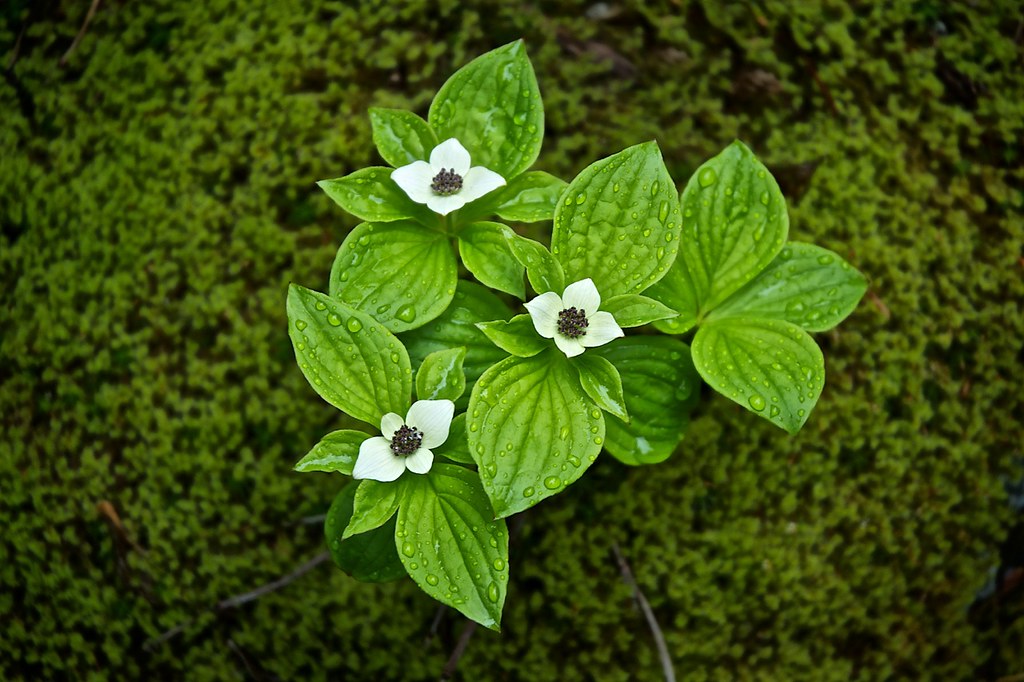
In this sense, the truth is no one finds or follows their destiny alone, do they? We are in this together, a complex community and subtle matrix, many different petals, perhaps, of a single irreducible flower.
___________________________________________________
Please join Lolly Daskal and me for a tweet chat, “Leadership and Destiny,” on Tuesday, January 24, 2012 at 8:00 PM EST. To participate, please go to this page, enter Lolly’s hashtag (#leadfromwithin) and sign in. It’s a great community of learning: fun, fast, full of soul.
Link to blog posting.
Link to Oestreich Associates website.
Sign up for monthly email newsletter on reflective leadership.
Twitter @DanOestreich
[wdgpo_plusone]

very good! i like it.
Thank you very much!
Dan: I am delighted to once again experience inspiring stimuli via my ears, not just my eyes, in visiting your blog.
I don’t believe in destiny, as I don’t believe in a higher power that has a plan for us. However, I do believe that each of us is uniquely positioned, through nature and nurture (or lack thereof), to contribute to the greater good. I hadn’t thought much about a birthright before, but I find a strong resonance in the idea that our birthright is to be fully who we are (as opposed, say, being who others want or expect us to be) … bringing to mind an insight expressed — somewhat less meditatively than Thich Nhat Hanh — by Lyle Lovett:
“If I were the man you wanted, I would not be the man that I am.”
Joe: that “plan for us” definition of destiny doesn’t particularly resonate with me either; its not my felt, personal experience, although I respect the fact that there are many people on this planet that do find that definition in their experience. I like to ask the question, “What do you think Jung meant?” as a way to create an open dialogue.
My post is not about arguing the point of some reality to the concept of destiny (can we reduce it to brain chemistry now, as we appear to be trying to relate everything to brain chemistry?). It is about what happens when people externally or internally experience pressures to not be fully who we are, to live in fear however subtle that fear might be. Recognizing the dynamic in ourselves, it is possible to open further in a more spiritual way, however that might be defined. We don’t have to get lost in literalisms any more than we would restrict music only to formal scales. Whatever words we use, for example, do we know enough to say there is nothing like an angel?
I come to this post at the end of my morning twitter session and have marked it for return between now and Tuesday’s LeadFromWithin -
I am a fan of very short blogposts, but when there is such substance as this contains, I see that my preference for short is trumped by content -
Your post is rich, profound, and rare.
Thank you.
Wayne
and yes, angels are real, call them what you will — “intelligence permeated entities”
“intelligence permeted energy fields”
but add to both “with heart ”
Wayne
Thank you for the kind words, Wayne. Appreciate your patience with longer posts as I don’t write much else. As for angels, I love your terminology, especially the heart part. And, yes, of course, I am a believer, whatever their name. For one of the most moving and mysterious accounts, this book is just incredible.
Dan.
What a great post, hard not to love anything that Thich Nhat Hanh writes, a man of deep compassion.
For such a huge topic, Destiny and birthright! I think you hit the nail on the head nicely. It surely is a question can bang around some leaders heads, and can confuse and misdirect unfortunately. But Thich Nhat Hanh’s words are always calming and within them so many lessons for us all.
Fear is such a strong emotion and gets to the top of the pile so often, but just as the lotus, it goes through a cycle. It will loose it’s force and return below to be dorment. Our fears are always there, whether dorment or flowering, they are part of our balance, even though they can bring hurt, feelings of being overwhelmed and heart break.
What we do with the emotion becomes our story, and has much to do with how we live, lead, love, and so grow. We are all lotus and will grow within if we are given warmth and love, we will blossom when we see the light and feel the warmth that humanity possesses.
Dan, you are a man of compassion and I hear your bell, see your flower and feel your peace. Thanks for the inspiring post and I look forward to joining you and Lolly on Tues.
Warmest,
Simon.
Simon
Thanks so much for your own warm, encouraging words. I love what you say here about fear as part of the balance. The greater the acceptance of fear, the less we run from it, the less power it has over us. Unthreatened by its “dormancy,” we have a place within ourselves to more patiently explore its dynamics and see how, as Krishnamurti says, we are those dynamics.
I’m very much looking forward to the tweet chat tomorrow night to hear more of your wisdom and the community’s wisdom.
Many best wishes
“This is not about concocting some fantasy of personal purpose or lodging forever in some private, disconnected nirvana.”
I have to admit I’ve done this and continue to do this.…I hope I can learn to see my destiny in a different way.
Dear Alma~
Thank you for reading this post and inviting it into your heart.
All the best
~Dan