As a coach and consultant, I often find myself helping clients with changes they would like to see themselves make. It is quite natural for the client, after quickly identifying what the change is about, to rush immediately to the next question: “How do I do this?” Yet, truth be told, the emphasis can be so strongly on the “how-to” part, which is behavioral and action oriented, that it begs the question of whether a true first step in self-change has been completed. What is that step?
This is not as easily answered as it might sound. One could say that “self-awareness” or “self-knowledge” or even “mindfulness,” the word of the day, needs to be present as a first step, but I believe it might be closer to “self-grok.”
For example, personally I have always struggled with two very important personal tendencies: 1) I can feel very different from other people in a debilitating way and 2) I can project negative explanations onto situations that are ambiguous. When these two patterns collide I can all too easily put myself into a feeling state that is devastating — put-down, shunned, isolated, and existentially worthless — over literally nothing. Sure, I can see the downside of these patterns for my work and for my life, and have for thirty years, but do the patterns actually change? They are, after all, powerful fundamentals of my temperament, and for all the contemporary notions of neuroplasticity, I find, like most people do, that it is not so easy to shift dynamics that have been in place most of one’s adult life. I can feel and see the patterns, and I can intervene, but the dynamic continues to happen, especially when under stress. It’s my reality.
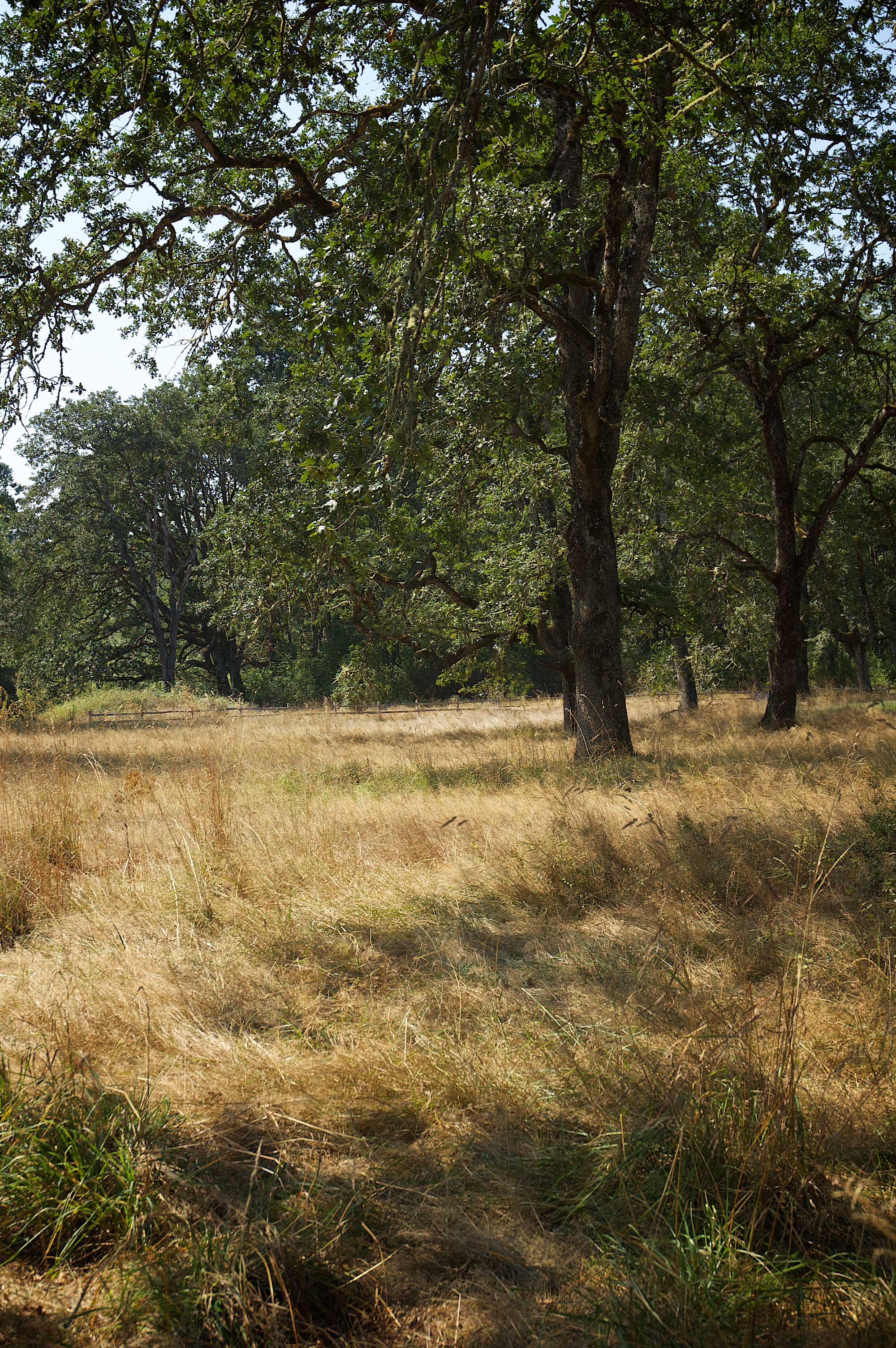
The self-grok that makes it far easier for me to own this difficulty, talk about it, and relieve some of its pain is related to Carl Jung’s archetype called the Shadow. The Shadow is the area of our being that is “dark,” having become so as a product of inherent make-up and caregiver conditioning. It represents the sides of us that are unacceptable to express. If I become aggressive, for example, as I grow up in a family where overt displays of aggression are punished, I learn quickly and painfully that I must throw my aggressive thoughts, feelings, and actions into the Shadow. They are still there, just locked in a hidden place I have taught myself doesn’t exist. Of course, it does exist, and others may see it quite clearly, especially when aggression “leaks” out through inadvertent behavior. Robert Bly called this phenomenon, “the long bag we drag behind us.” The long bag is filled with all the parts of who we are that it is not okay to be. Socially unacceptable stuff goes there, like aggression, but also parts of us that might have been useful and fulfilling but not approved of in our early social environments. A person’s creativity, for instance, might be thrown into the bag if it was too disruptive to a family system. The Shadow operates, in part, as an unconsciously designed process of self-protection from instincts, feelings, and actions that are somehow “dangerous” within a child’s world. Later, as adults, we gradually learn to reclaim those lost parts of ourselves.
The self-grok recognizes that the missing pieces of me related to my desired change are part of what’s in the bag, that they are in fact here already, if unconscious, and even if an ongoing pattern of behavior seems to contradict that belief. In terms of my own tendencies, therefore, the critical recognition that makes change accessible is knowing “the answer is already in the Shadow.” My desired growth is not entirely about practice of a new behavior. That practice has to be founded in the “discovery” of the new behavior as already part of who I am, perhaps as truly who I am.
It is true some people only get to that discovery by trying a behavioral shift, but it isn’t the shift alone that works; it’s the seeing that “the shift is me.” If the behaviors I try on remain “outside” of who I believe myself to be, I am likely to have a great deal more trouble fully owning my patterns and doing much of anything about them. To keep pushing in this way would be, in effect, simply trying to throw more of me into Shadow. As an adult that just doesn’t work very well. It feels disingenuous, and it is. Moreover, the critical recognition of my unconscious strengths helps me dis-identify from the patterns I don’t like. Yes, they are part of me, but they are not all of me. I can see them as a structure, an artifice, that at one time may have had value, but not so much now.
The old brain grooves are there, but the capacity for self-grok is a magnificent antidote. It is like a photographer’s flash that, although lit only for the briefest moment, fully reveals the scene. The self-grok is understanding intuitively, and “in a flash,” what’s in the bag, and it is this that creates the actual capacity for change. If the answer isn’t already “in me,” how could I make any shift at all, except through force? In terms of my own patterns, it is the realization that my connections and my similarities to others are already truly here, if invisible at those moments when my ideas of difference from others overtake me, and that another more accurate and worthwhile reality is present even as I make depressive projections onto others and my situation.
Suppose you wanted to write a book. Many of us do, but more than some do not. But let’s say the inner writer is in the Shadow. Instead of sitting down to force the writing, let the inner writer, still in the Shadow, still unconscious, but here, inform your fingers on the keys. Let the Shadow writer begin to wake up. See what happens.
So that’s what I believe may be helpful to you in order to begin making your own changes — an intuitive presentiment of who you fully are. Without that, there’s only the painful discipline of trying in the face of what can feel to be a very large and demotivating task. This presentiment comes, in turn, from trusting your perceptions of your own psychological and spiritual reality, your own sense of a unique world and cosmos independent of what others see. This is the you that lives beyond language itself. It is intuition, pure and simple, and yet is also knowing in a most visceral way that the water of the stream you touch is as cold (and refreshing) as you feel it to be. No one has to tell you that, just as no one needs to tell you how to change; you already know how, for yourself alone.
Following this path, change always seems to come with some robust personal meaning, which is to say it cannot be reduced to a strict, easy formula, but always acts as a completion. It is more like the morning shadows among the trees, beautiful and shifting, and diminishing as the sun rises higher, heralding a day meant to come.

RSS and email subscription, monthly Unfolding Leadership newsletter, search and other functions may be found at the “Further Information” tab at the bottom of this page.
Pinterest users, you can pin pictures from this weblog via this Board.

Beautifully vulnerable and lovely share mhy friend. I love how you so willingly share parts of your inner landscape as not something to be afraid of and protect (Oh no! What if they find me out!) but as something as normal and natural as anything else in the world.
Personally, I love what I’ve read of Jung so far. Mainly through the lens of other authors such as David Richo who wrote Shadow Dance, which is all about the archetypes and shadows that you mention in your post.
You have already began to lift that dark and ominous lid of all that we’ve had to suppress and deny growing up and yet, we do carry so much of that into our adults world and relations. Even as we struggle with dualities within us and all around us, it’s as if we make it all to hard and misinterpret what is going on.
Our invitation isn’t so much about trying to eliminate ANYTHING as much as it is trying to be acknowledged and seen. Witnessed. And integrated.
Only what we continue to DENY continues to create the heavy wake in our consciousness and leave the echoing tremors rippling throughout our bodies.
Yet only in safety can we allow the conversation and witnessing to unfold.
I was so happy to have been introduced to an interview of John O’Donohue yesterday (via Nic Askew) and fell asleep listening to it last night ( not due to boredom, it was simply late! haha) …finally completing it this morning. Once again, I was reminded of how powerful conversation is. Not so much in dictations or pretending to know anything but in the art of translation of what we discover while we’re on the journey!
I LOVED hearing his voice tell the stories, read the poems and the calming nature of his presence and that of the interviewer that transcends time and space and permeates the listener.
Your writings have a similar affect, which is why I love them so much.
Thank you so much for another wondrous share Dan.
So absolutely true in my ears.
We already know, deep down, who we are… Let’s find out NOW!
Thank you Dan.
Dear Samantha~
Great take:
“Our invitation isn’t so much about trying to eliminate ANYTHING as much as it is trying to be acknowledged and seen. Witnessed. And integrated.”
This is such an important truth. It’s not about getting rid of aspects of who you are, but finding a place for them, their meaning, their subtle transformations as the jigsaw fits together. Even very tough emotions, like anger, can have a profound truth at their core. We do not need to be afraid of our discoveries — they will in the end only help us fulfill our destinies — a phrase Jung used in the autobiographic writing, Memories, Dreams, Reflections. It is one of my favorite books about precisely the wisdom have expressed.
All the best
~Dan
Dear Anne-Marie~
Thank you so much for taking a moment to comment on this post. Such a passionate affirmation! I love it!
All the best
~Dan
Thank you Dan. I could feel the shadow whispering even as I read this. The answers are often found in the places we don’t want to look. Beautiful description of this journey.
Thank you Dan! This comes for me at a very trying time in my life when all that I know myself to be seems ill suited for the task at hand. I need to trust that the bag holds what I think I lack.
Dear Scott~
It’s always great to see your comments here. I really like the notion that there’s a “whisper.” That’s a great way to point to intuition as a needed resource for the journey. Learning to trust that whisper can be a vital part of the work.
Much appreciated!
Best
~Dan
Dear Terry~
I am glad this post offers some inspiration and support to you at an important time. Here are a couple of additional thoughts that may be helpful.
First, if something is in the Shadow, it means you cannot see it or feel it directly — so don’t expect to. Intuition is key; it’s a hunch, which is like lowering a water bucket into darkness. Sense that the water is there even if you can’t hear it or see it.
Look for inner voices that say you don’t have or can’t have some specific things you feel you need. If you hear yourself saying phrases such as “I’m not smart enough .…” or “I’m not courageous enough.…” or I’m not persistent enough…”, that’s a solid clue about what you’ve thrown into the darkness — your intelligence, your courage or your persistence. It’s still there, even if you can’t quite feel it yet. Know that; have faith in that, be surprised by how it actually begins to show up.
Firmly acknowledge and own the specific patterns of thinking or behavior that you believe will hijack you and refuse to be ashamed or embarrassed or in any other way stopped by those patterns. Talk about them with your friends, if you like. Then let your heart decide on the antidote for yourself alone rather than allow the patterns you see to be inflamed by rigid self-judgment or the opinion of others.
Remember that taking things out of the bag is often a slow process. It doesn’t necessarily happen all at once. First, reality rattles, there’s some cognitive dissonance and inner tension, then a sense of danger as the old voices try to convince you to maintain the status quo.
Be easy about this. Let the Devil have its due. Abjure perfectionism. Read (or re-read) this poem. And this one. And this one.
If you like, email me with more details about your situation via this page for some additional personal support.
All the best
~Dan
Another wonderfully introspective piece Dan. I like the photographer’s flash analogy. It is that larger whole which calls us to surrender our identification with our narrower selves.
Outwardly, this may look like submission, when we appear to be more accepting of those against whom we had projected a dark shadow; or defiance, when we appear to be more critical of those toward whom we had projected a golden shadow. But those are relative, external comparisons. Inwardly, it’s about recognizing the larger whole illuminated by the flash, and realigning our actions whenever we find ourselves drifting from its truth, our own truth.
The friction of this realignment is gratefully lubricated by compassion. Compassion for ourselves, and compassion for others — which is conveyed so eloquently in your writing.
Dear Kartik~
It is always such a pleasure to receive your comments. This is a lovely extension of where I am going in this post, and how shifts in external relations express discoveries within. The Shadow projections we make positively or negatively are all deep learning opportunities.
As to compassion, there is more writing to be done. I don’t know that we connect the dots as easily there, thinking it is only a feeling for other people, when what it seems to be is more a sense of profound connection to a personal spiritual reality.
Thank you so much for sharing the water from your own wisdom’s well!
All the best
~Dan